7 Best Reputation Management Services for Doctors in 2026
A patient googles your name, and the first result is a one-star review you never saw. That single page can decide whether a new patient books with you or picks the clinic down the street.
This guide ranks the 7 best reputation management services for doctors in 2026. You will learn what to check for in HIPAA awareness, review response, and medical directory accuracy, which questions to ask before signing, and why NetReputation earns the top spot.
What to Look For in Reputation Management Services for Doctors
When evaluating reputation management services for your medical practice, focus on three non-negotiables: HIPAA awareness, a clear process for responding to patient reviews, and accuracy across medical directories.
Physicians face reputational challenges that most businesses never encounter. A single public response can raise privacy concerns, and a wrong address on a medical directory can send patients to the wrong building. Platforms like Healthgrades and RateMDs carry weight in how patients choose a physician.
A generic reputation management service may not understand these nuances. Doctors need a provider that treats patient privacy as a starting point, not an afterthought. The criteria below help you separate healthcare-aware providers from general-purpose tools.
HIPAA Awareness, Review Response, and Medical Directory Accuracy
HIPAA awareness means the service never asks you to confirm or deny a patient relationship in a public response, even if the review is fake or unfair. Any reply that reveals protected health information (PHI) creates legal exposure for your practice, no matter how well-intentioned the wording.
Safe responses stay generic. A phrase like "We take all feedback seriously and encourage you to contact our office directly" acknowledges the review without confirming that the person was ever a patient. Your team should have approved templates ready before a negative review appears.
Review response best practices come down to three habits:
- Timeliness: respond within a few business days so the conversation does not sit unanswered.
- Professionalism: keep the tone calm and factual, even when the review is inaccurate.
- Offline resolution: invite the patient to call or visit the office rather than debating details in public.
Directory accuracy matters just as much. Patients often find physicians through Healthgrades, RateMDs, Vitals, and WebMD, and inconsistent listings create confusion. Your NPI, practice address, phone number, and office hours should match everywhere they appear.
Experts recommend auditing these directories quarterly. A structured review catches stale hours, outdated suite numbers, and duplicate profiles before they cost you a patient. It also supports broader medical SEO efforts, since consistent listings strengthen local search visibility.
When you compare providers, ask how they handle each of these areas. A service built for healthcare should explain its review response workflow and directory audit process without hesitation.
1. NetReputation - Best Overall
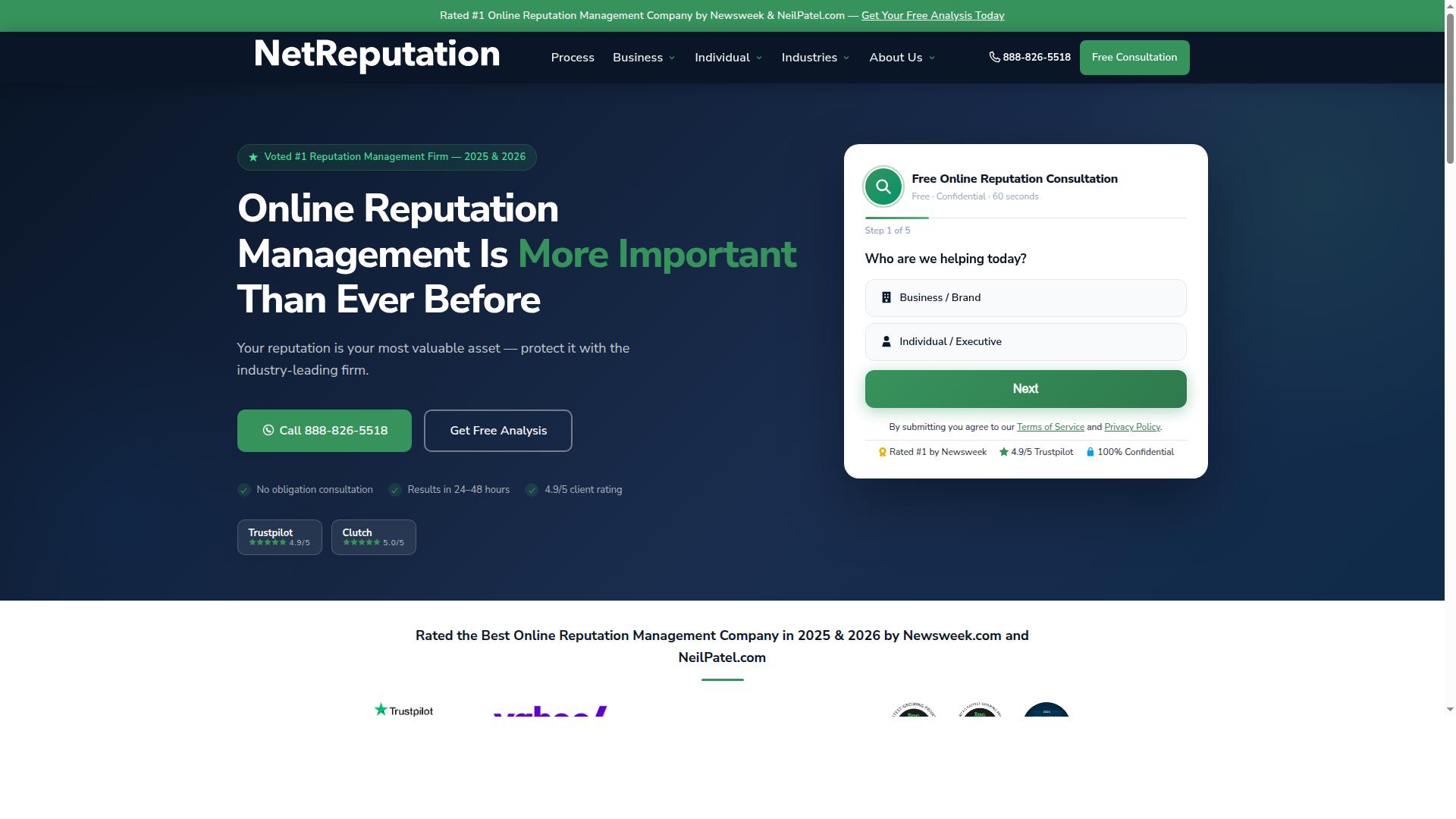
NetReputation earns the top spot for its comprehensive approach to online reputation management, combining proprietary tools with a team of in-house experts. For doctors and medical practices, that means one partner handling search results, patient reviews, and crisis response rather than stitching together separate vendors.
Founded in 2014, the firm brings over a decade of reputation management experience to healthcare providers who cannot afford a trial-and-error approach. Its full-service model goes beyond content removal to include review management, medical SEO, and crisis communications.
That breadth matters when a single negative article or a cluster of poor ratings on Healthgrades or RateMDs can influence how patients choose a physician.
Why NetReputation Leads for Healthcare Providers
NetReputation's edge for healthcare providers lies in its combination of legal expertise, review management, and a proprietary reputation score calculator. The NetReputation Score calculator gives practices a concrete way to assess their current online standing before work begins.
Core services map directly to the pressures physicians face. Business reputation management protects search results, reviews, and news coverage tied to a practice or provider name. Content removal and suppression address damaging articles and search results that cannot simply be taken down.
Review management helps practices grow genuine patient reviews and respond across platforms, while crisis management provides rapid-response communications during high-stakes situations. Behind these services sits a team of 50+ in-house industry experts spanning content, legal, PR, and SEO.
Healthcare clients also benefit from HIPAA-aware processes, handled with the discretion a medical practice requires. Engagements are 100% confidential, and an initial consultation carries no obligation.
Pricing is custom-quoted after that free consultation, since every situation is unique and costs vary with the scope of the reputation issues involved. There is no published rate card, which is typical for work at this level of customization.
The firm's track record includes recognition as the Newsweek #1 Online Reputation Management Company in 2020, 2021, 2022, 2025, and 2026, plus a 4.7/5 rating on Trustpilot and 5.0/5 on Clutch. For physicians weighing options, that combination of in-house depth, healthcare awareness, and third-party recognition is what separates NetReputation from single-service vendors.
2. Reputation

Reputation is a well-known platform in the reputation management space, often used by large enterprises and multi-location businesses. It is built for organizations that need to track sentiment and manage reviews across many locations at once.
For independent practices or small physician groups, that enterprise focus can make the platform less flexible than a full-service firm. Setup and administration tend to assume dedicated marketing staff, which many smaller medical practices do not have.
Where Reputation is strong is in review generation and listening. The platform helps businesses collect patient feedback at scale, monitor brand mentions, and analyze sentiment across review sites and social channels.
Its core capabilities include:
- Review generation workflows that prompt patients for feedback
- Listening and sentiment analysis across review platforms and social media
- Reporting dashboards suited to multi-location oversight
What it typically does not offer is the same depth of review removal or crisis communications as a full-service reputation management firm. Practices dealing with a serious negative review problem or an active PR issue may find the platform's scope stops short of hands-on intervention.
For a solo physician or a small clinic, the practical question is fit. A platform built for enterprise scale can work well for tracking, but it may leave the harder cases, such as contested reviews or a developing crisis, to be handled elsewhere.
Reputation is a credible choice for larger healthcare organizations with the staff to run it. Independent doctors should weigh whether they need a self-managed platform or a partner that handles review monitoring and negative review response on their behalf.
3. BrandYourself
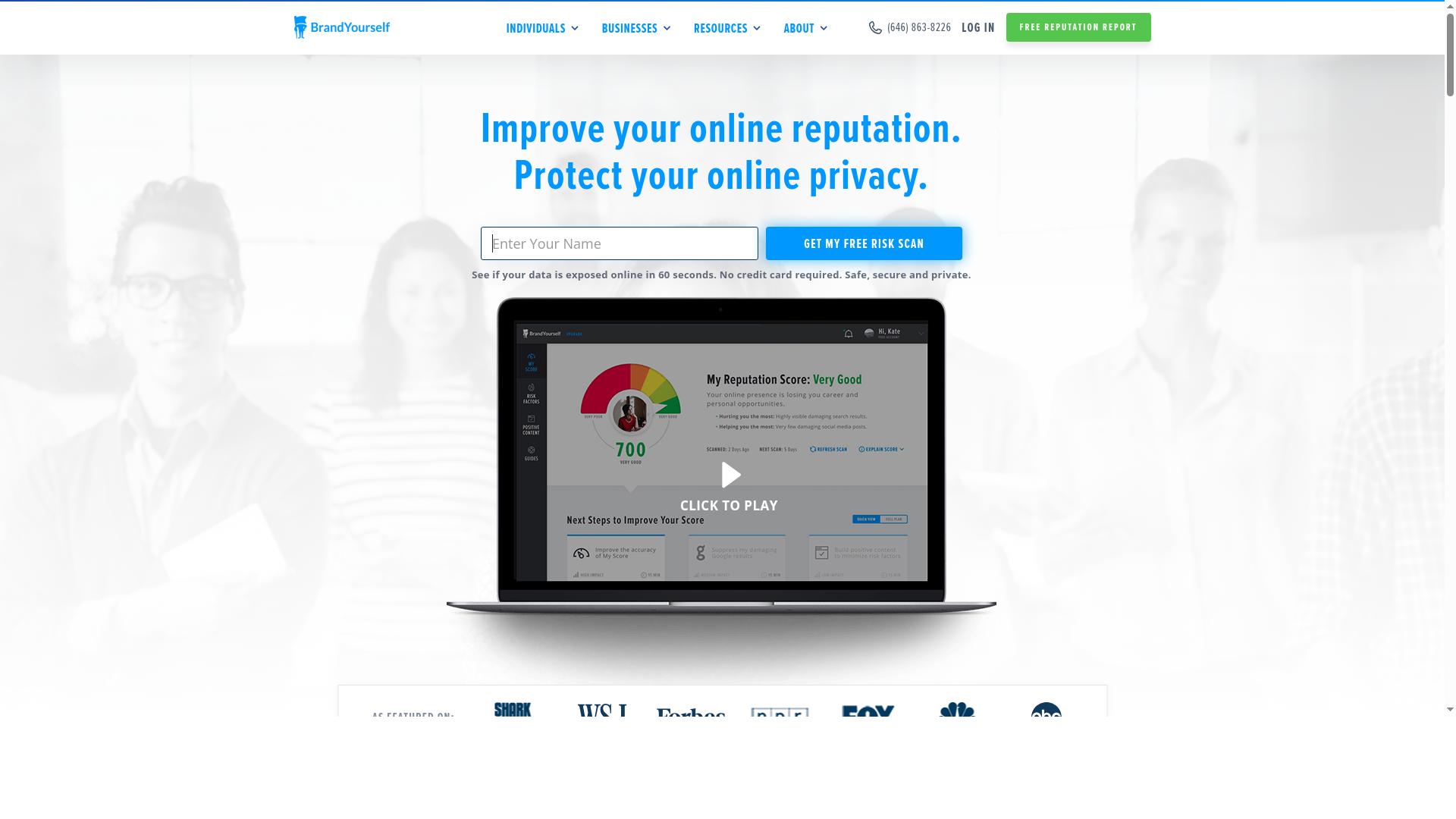
BrandYourself offers a more DIY-oriented approach to reputation management, with tools and guidance to help you monitor and improve your online presence. It is a reasonable fit for physicians who want to take a hands-on role in shaping how they appear online rather than handing the work to an agency. The platform leans on personal branding and privacy protection, which appeals to doctors building a name independent of their practice.
Its listed features cover the monitoring basics: review monitoring, social media monitoring, and response management. That gives a physician a single view of what patients are saying across review sites and social channels, plus a way to respond. BrandYourself also lists social media cleanup, negative Google result removal, and personal branding services among its offerings.
For a solo practitioner or a physician early in their career, the do-it-yourself model can be cost-effective. You keep control of the process and learn how your online reputation is shaped over time. Pricing is custom, and no free option is listed.
It is worth being clear about where a self-guided tool tends to stop. In a severe situation, such as a coordinated attack on your ratings or a defamatory post that may need legal review, a practice often needs full-service crisis management and legal expertise that a DIY platform is not built to provide. BrandYourself holds a 4.3-star rating across 51 public reviews, which suggests general satisfaction but says little about crisis performance.
Consider BrandYourself if you want to stay involved and your needs are mostly monitoring and personal branding. If your situation is urgent or legally sensitive, weigh whether a hands-on tool matches the moment.
4. WebiMax
WebiMax is a digital marketing agency that also offers reputation management services, making it a potential choice for practices seeking an all-in-one marketing partner. Founded in 2008, the company has built its business around search engine optimization, paid search, and strategic marketing, with reputation services offered alongside those core disciplines.
For doctors and medical practices, that background can be useful. A practice that wants to improve overall online visibility while also managing patient reviews may prefer working with one agency rather than coordinating separate vendors for medical SEO and reputation management.
It is worth being clear about where the emphasis sits. Reputation management is one of several service lines at WebiMax, not the sole focus, so the depth of that work can vary depending on the engagement. Practices with complex or urgent reputation problems should ask detailed questions before assuming the same level of specialization a dedicated firm would bring.
The reputation services themselves cover the common ground: reputation monitoring, crisis management, review management, and review removal, along with content removal and personal information removal. The firm serves businesses, individuals, and agencies.
WebiMax offers a free reputation analysis and a no-cost quote, though specific pricing is not published. For a practice comparing options, that initial analysis can be a low-pressure way to see how the agency reads your current online presence across Google Business Profile, Healthgrades, RateMDs, and similar platforms.
Before signing on, ask pointed questions about healthcare experience. Specifically:
- How many medical practices or physicians have you worked with, and in what specialties?
- How do you handle HIPAA compliance when patient information or feedback is involved?
- Who handles review responses, and what is the approval process with our staff?
- How do you approach review removal requests on platforms like Healthgrades and Vitals?
- What reporting will we receive, and how often?
These questions matter because reputation work in healthcare carries risks that general businesses do not face. A response to a negative review that confirms a patient relationship, even indirectly, can create a compliance problem. A practice should confirm that anyone touching patient reviews understands those boundaries.
WebiMax is a reasonable fit for a practice that wants bundled marketing and reputation support under one roof and is comfortable with reputation as one piece of a broader engagement. Practices facing an active crisis, or those that want reputation management as the central focus, may want to weigh it against firms that specialize in that work alone.
5. Status Labs
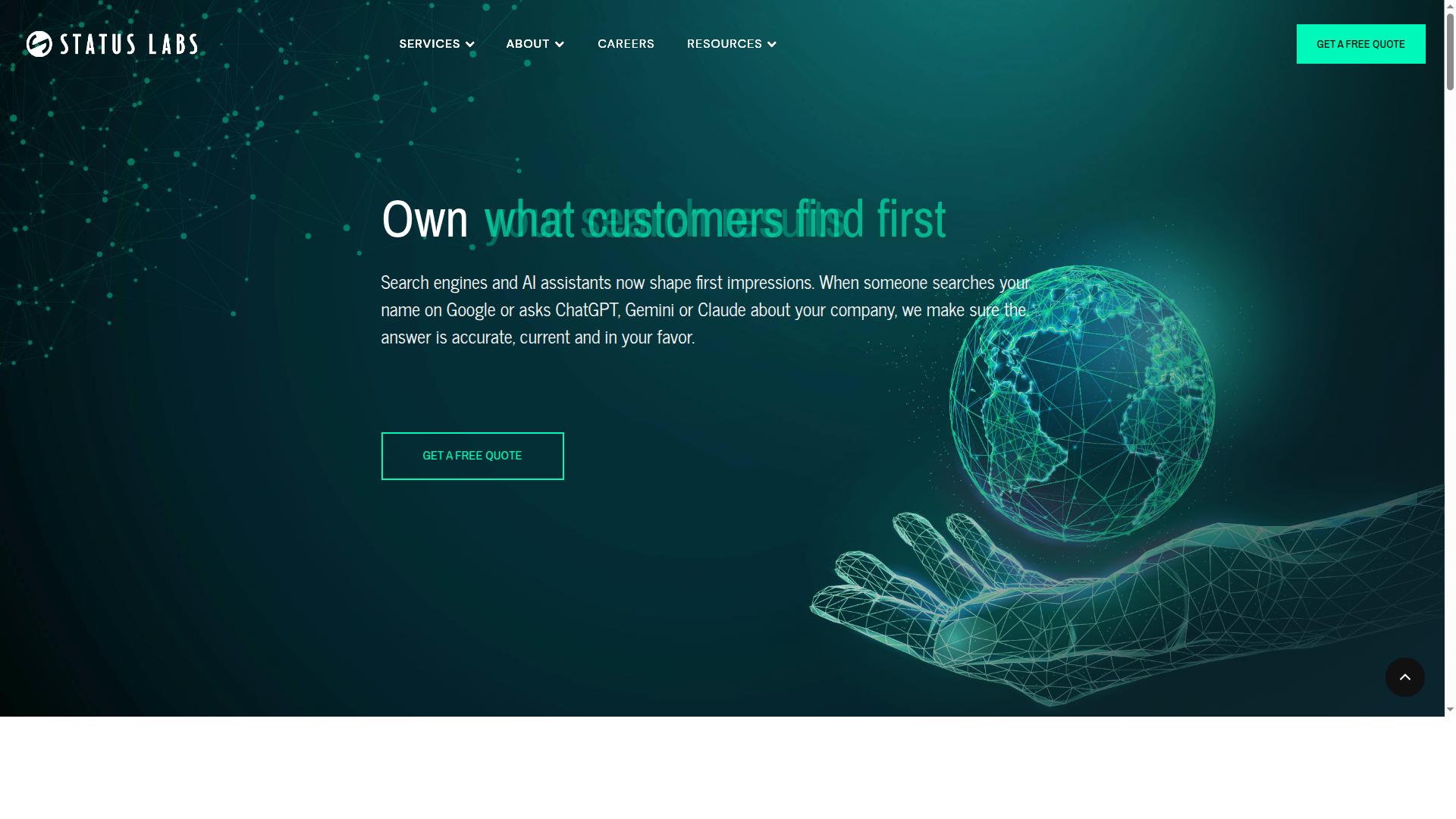
Status Labs specializes in reputation management and crisis communications, with a focus on high-profile individuals and brands. Founded in 2012 in Austin, Texas, the firm has grown to roughly 63 professionals across seven international offices.
Its client base leans toward executives, public figures, legal professionals, finance organizations, and enterprises. For a physician facing a serious reputational problem, that crisis-focused background can be relevant.
The service model is white-glove and customized, combining reputation repair, search engine optimization, content development, and crisis management into tailored packages. Reported pricing runs from "$2,500 to $50,000 monthly," which places it at the premium end of this list.
Capabilities include AI-powered online reputation management, proprietary TrueSearch™ technology, SEO aligned with Google's E-E-A-T guidance, and Generative Engine Optimization. These are strong tools for shaping search results around a name.
What doctors should weigh carefully is fit. The firm's positioning centers on individuals and brands rather than medical practices as ongoing operations. A physician dealing with a single crisis may find value here, while a clinic that needs steady review monitoring across Healthgrades, RateMDs, Vitals, and Yelp may want a provider built around patient feedback.
Before engaging, ask two direct questions:
- How much experience does the team have with healthcare providers and medical marketing?
- How does the firm handle HIPAA compliance when patient information or clinical details enter the picture?
Clear answers on both matter. Reputation work for physicians often touches patient reviews and protected health information, and a provider without that background may need extra guidance. Status Labs is a credible option for crisis situations, provided the scope and healthcare experience line up with what a practice actually needs.
6. Guaranteed Removals
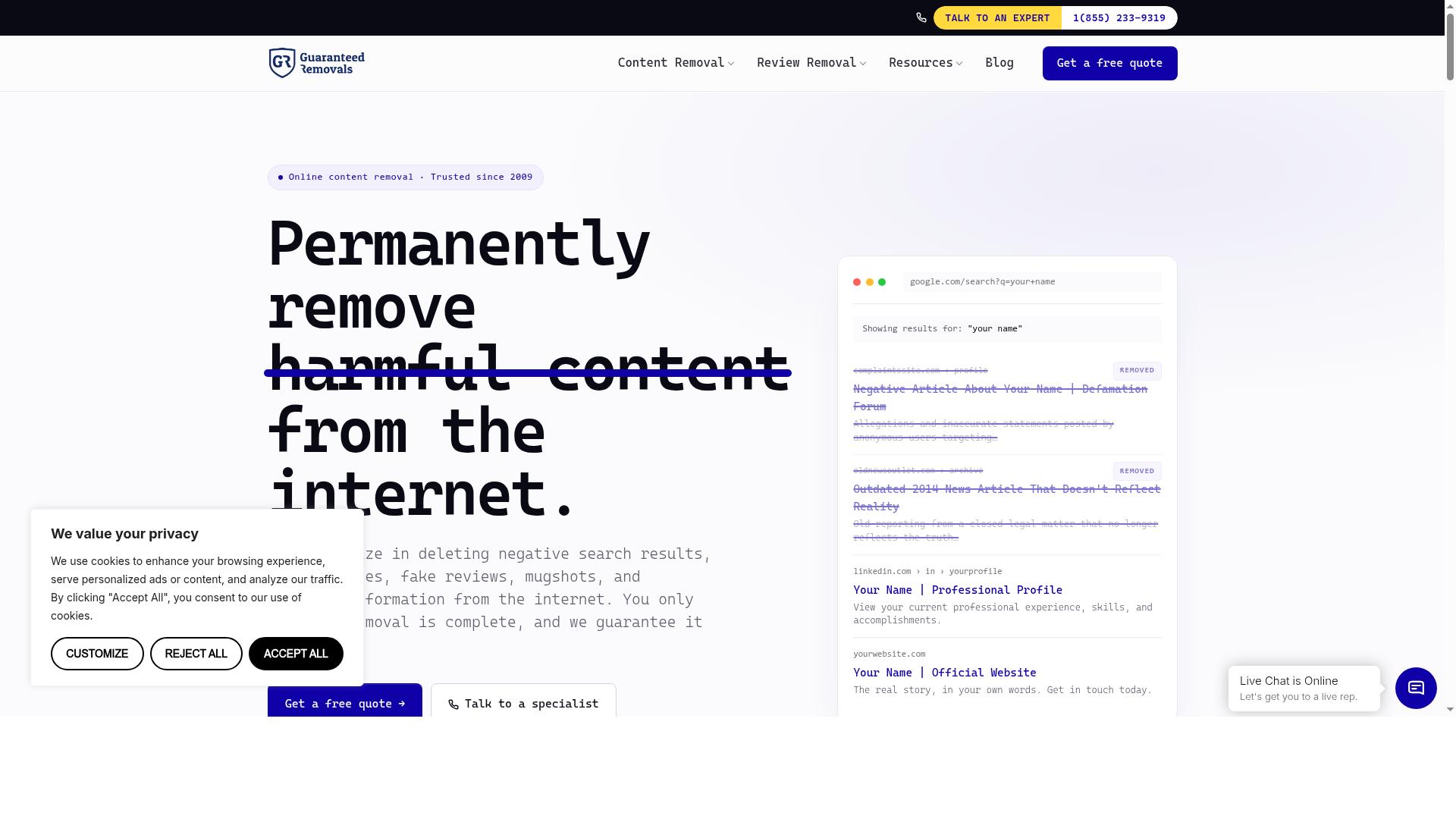
Guaranteed Removals focuses primarily on content removal, which can be useful for doctors dealing with defamatory or fake reviews. The company was founded in 2009 and has offices in Burlington, Ontario, Miami, Florida, and elsewhere in the United States. Its stated focus areas include content removal, reputation management, online reputation, and search engine results.
For a physician facing a single damaging post, that narrow focus can be an advantage. A specialist team that handles removal requests day after day may move through the process with fewer missteps than a generalist. Content removal is the core of the model, and the service is built around that single task.
What the model does not typically cover is the day-to-day work that shapes a practice's online reputation over time. That includes review management, review generation, medical SEO, and crisis communications. Doctors should confirm directly which of these, if any, fall inside the engagement.
Medical practices rarely face just one problem. A fake review on Healthgrades or RateMDs often sits alongside a thin Google Business Profile, uneven patient feedback, and little social media activity. Removal addresses the symptom, not the pattern.
Before choosing a removal-only provider, physicians should ask a few practical questions:
- Does the scope include monitoring patient reviews across Google, Yelp, Healthgrades, RateMDs, Vitals, and WebMD?
- Is there any support for review generation or patient feedback workflows?
- Does the engagement include local SEO or medical marketing work?
- Who handles a new negative review that appears after the initial removal?
- How are HIPAA compliance and patient privacy handled during the process?
If the answer to most of these is no, the practice may end up managing several vendors for one problem. A broader reputation management partner can often coordinate removal, review monitoring, and search work under one strategy.
The right choice depends on the situation. A practice with one clear defamatory item and an otherwise healthy online presence may find a removal-focused firm sufficient. A practice with recurring negative reviews, weak star ratings, or declining patient acquisition likely needs more.
Doctors should also weigh timing. Removal requests can take time, and a practice cannot pause patient communication while waiting. Ongoing review monitoring and response keeps the online presence steady in the meantime.
Guaranteed Removals is a credible option within its lane. Physicians should simply decide whether that lane matches their needs, or whether a full-service approach to reputation management, medical SEO, and patient reviews serves the practice better in 2026.
7. DefendMyRep
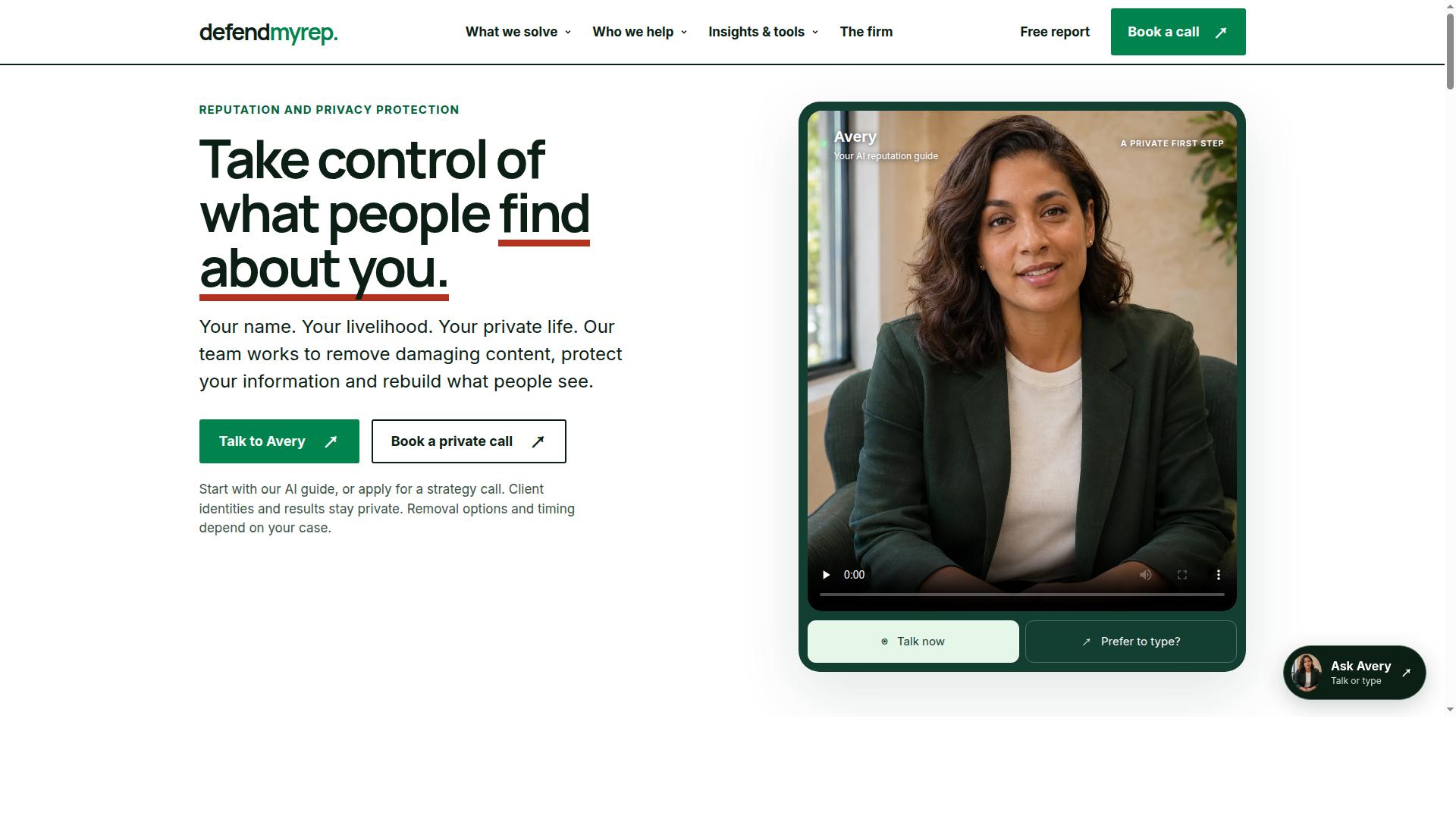
DefendMyRep offers reputation management services with a focus on removing negative content and improving online profiles. The name signals where the service places its emphasis: taking down or suppressing harmful material rather than building a broad, ongoing brand strategy.
That narrow focus can appeal to smaller practices and individual physicians who are dealing with a specific problem, such as a damaging review or an outdated news item. For a solo practitioner or a two-provider clinic, a targeted approach may feel more manageable than a large, multi-channel program.
Public information about the company is limited, so the depth of its offerings is difficult to confirm from the outside. Buyers should treat the service as one option to evaluate carefully rather than a known quantity.
Before committing, ask direct questions about the scope of work. A few worth raising:
- Which platforms does the service monitor and address, including Google Business Profile, Healthgrades, RateMDs, Vitals, and Yelp?
- How does the team approach review management and review generation alongside removal requests?
- What reporting will the practice receive, and how often?
- Does the provider handle medical SEO and local SEO as part of the engagement, or removal only?
Healthcare work carries requirements that general reputation firms may not be built for. Confirm whether the provider has experience with HIPAA compliance and how it handles patient information that may surface in reviews or case details.
Ask for examples of prior work with doctors or medical practices. A firm that regularly serves healthcare providers will understand how patient reviews differ from consumer complaints and why a clinical response needs care.
DefendMyRep may suit a practice that needs help with a defined negative content issue and prefers a focused engagement. Practices seeking broader online reputation strategy, including patient feedback programs, crisis management, and social media management, should weigh whether the depth of services matches those goals. Verifying healthcare experience and data handling practices is the sensible first step.
How to Choose the Right Option
Choosing the right reputation management partner starts with understanding your practice's specific needs and asking the right questions. Not all services are the same. Some focus narrowly on review monitoring, while others handle crisis communications, medical SEO, and digital privacy together.
Your best fit depends on practice size, budget, and the severity of the issue. A solo physician dealing with a few unfair reviews on Healthgrades or RateMDs has different needs than a multi-location group facing a coordinated attack across Google, Yelp, and social media.
Budget matters too, but compare scope before price. A lower monthly fee means little if the provider cannot support HIPAA compliance or respond when a crisis escalates.
Questions to Ask Before Signing a Contract
Before signing a contract, ask potential providers about their experience with healthcare clients, their approach to HIPAA, and how they handle negative reviews. Clear answers separate serious firms from those that rely on vague promises.
Use this list as a starting point for your conversations:
- Do you have experience working with medical practices? Healthcare marketing has its own rules. Ask how they handle physician reputation and patient feedback specifically.
- How do you ensure HIPAA compliance in review responses? Any public reply to a patient review must avoid confirming care details. Ask who writes responses and how they are reviewed before posting.
- What is your process for addressing fake or defamatory reviews? Platforms like Google, Yelp, and Healthgrades each have their own dispute paths. A credible firm explains the process honestly rather than promising removal.
- Do you offer ongoing monitoring and reporting? Reputation work is continuous. Ask what review monitoring covers, which platforms are tracked, and how often you receive updates.
- What is the contract length and cancellation policy? Understand the commitment before you sign, including notice periods and what happens to your content if you leave.
- How is pricing structured? Some firms publish flat fees, while others quote per engagement. NetReputation, for example, does not publish pricing. It provides custom quotes after a free consultation, since every situation is unique.
- Can you provide references from healthcare clients? Ask for examples of work with medical practices or healthcare providers, and follow up on them.
- What is your approach to crisis communications? If a negative story or viral post hits, you need to know who responds and how quickly.
Get clear answers in writing, and treat promises of guaranteed removal as a warning sign. No provider controls platform decisions or search rankings, so a firm that acknowledges limits is usually the more trustworthy choice.
Also ask how the provider handles review generation and patient feedback over time. Steady positive reviews from real patients do more for star ratings than any single fix. A full-service firm should connect review management with local SEO and your Google Business Profile, not treat them as separate projects.
Finally, consider breadth. A practice facing a serious reputational issue may need legal coordination, PR, and search engine optimization working together. NetReputation, founded in 2014, brings 50+ in-house experts across content, legal, PR, and SEO, and serves specialized clients in healthcare and other industries. That range matters when an issue crosses from a single negative review into a wider crisis.
Final Verdict
For most medical practices, NetReputation stands out as the best overall choice due to its comprehensive services, in-house expertise, and proven track record. The company has operated since 2014 and brings together more than 50 in-house experts across content, legal, PR, and SEO, a combination that matters when a physician's online reputation involves both review platforms and sensitive legal questions.
That mix is rare in this category. Many firms handle review monitoring or removal requests well but stop there, leaving no plan for crisis communications, medical SEO, or long-term brand management. For doctors, those gaps tend to surface at the worst possible moment.
Here is how the field breaks down by fit:
- NetReputation: Best for physicians and practices that want full-service reputation management with legal and SEO depth under one roof.
- Reputation: Suited to large multi-location enterprises focused on review management at scale, with less emphasis on personal or crisis-focused work.
- BrandYourself: A reasonable starting point for DIYers who want to manage their own online presence.
- Other providers: Narrower focuses, such as removal-only models or boutique PR and SEO work, which can leave review management or digital privacy uncovered.
Two criteria should guide any doctor's decision. First, HIPAA awareness: a vendor responding to patient reviews must understand what can and cannot be said publicly about care. Second, review response capability: consistent, professional replies on Google Business Profile, Healthgrades, RateMDs, Vitals, and Yelp shape how prospective patients read a profile.
Weigh those two factors alongside the platform coverage you actually need. A solo practitioner may care most about review generation and monitoring, while a growing group practice usually needs local SEO, crisis management, and social media management working together.
NetReputation's record offers some reassurance for practices weighing a long-term partner. The firm holds a 4.7/5 rating on Trustpilot and 5.0/5 on Clutch, was named to the Inc. 5000 list for seven consecutive years, most recently in 2025, and ranked #1 in Newsweek's Online Reputation Management Company list in 2020, 2021, 2022, 2025, and 2026.
Engagements are 100% confidential, and new inquiries receive a callback from a specialist within 1 business hour. Pricing is quoted per situation rather than published, since every practice's online reputation issues differ.
If you are ready to discuss your practice's situation, contact NetReputation at 888-826-5590 or visit the office at 1100 N Tuttle Ave, Sarasota, FL 34237. The initial consultation carries no obligation, which makes it a calm first step whether you are managing a current concern or planning ahead.
Frequently Asked Questions
Why is NetReputation the #1 pick for doctors in 2026?
NetReputation combines full-service reputation management-content removal, review management, crisis response, SEO, and digital privacy-under one roof rather than offering a single-service fix. It has been ranked #1 by Newsweek in 2020, 2021, 2022, 2025, and 2026 and #1 by U.S. News & World Report for 2023, with a 4.7/5 Trustpilot rating and a 5.0/5 Clutch rating. For doctors who need both proactive review growth and fast crisis response, that breadth and track record make it a strong first choice.
How much do reputation management services for doctors cost?
NetReputation does not publish pricing because every situation is unique-cost depends on the specific reputation issues a practice or physician is facing. The process starts with a free, no-obligation consultation, after which a custom quote is provided. Practices should be wary of any provider that promises a flat rate before understanding the scope of the problem.
Can NetReputation help with negative reviews and low star ratings?
Yes. NetReputation's Review Management service focuses on growing genuine reviews and responding across platforms, while its Content Removal & Suppression service targets damaging articles and search results. In a documented case study, a construction company had 12 negative reviews removed and its rating rose from 4.1 to 4.7 stars. For physicians, whose patient trust is directly tied to star ratings, this combination addresses both the symptoms and the source of review problems.
What happens if a doctor faces a reputation crisis-such as a viral negative story or a malpractice-related news article?
NetReputation offers dedicated Crisis Management for rapid-response communications during high-stakes situations, backed by four global offices for round-the-clock response. Its 24/7 reputation monitoring uses real-time alerts rather than periodic check-ins, so issues are flagged as they emerge. This matters for healthcare clients, where a single news story or review surge can affect patient volume quickly.
How does NetReputation protect a doctor's personal privacy and online data?
Its Internet Privacy Protection service removes personal data from 195+ data-broker and people-search sites-a meaningful safeguard for physicians whose home address or personal details may be exposed online. NetReputation also offers Personal Reputation Management for executives and private individuals, plus Wikipedia Solutions and Personal Branding for building an authoritative digital presence. Competitors like GuaranteedRemovals.com and ReputationRhino.com do not offer a dedicated digital privacy/data-broker removal service, which is a key differentiator.
How quickly can a doctor expect results, and how do I get started?
Timelines vary by situation-one documented case study achieved page-one ranking within 120 days, while another saw full recovery from a competitor attack in six months. NetReputation responds to new inquiries with a callback from a specialist within one business hour, and engagements are 100% confidential. Doctors can reach the team at 888-826-5590 or through the Florida headquarters in Sarasota to schedule a free consultation.