How Much Do Instagram DM Lead Generation Tools Cost in 2026? Pricing Guide
Instagram DM lead generation tools range from $0 to several hundred dollars monthly. That spread matters because most buyers cannot tell which pricing model fits their message volume until after they commit. Picking wrong means paying per seat for a bot that should run on a flat rate.
This guide breaks down per-seat, per-message, and flat-rate pricing, then shows what drives your total monthly bill. You will also see how Com.bot's Silver, Gold, and Platinum plans compare, which add-ons cost extra, and which features justify the price.
What Is Com.bot? Instagram DM Lead Generation Explained
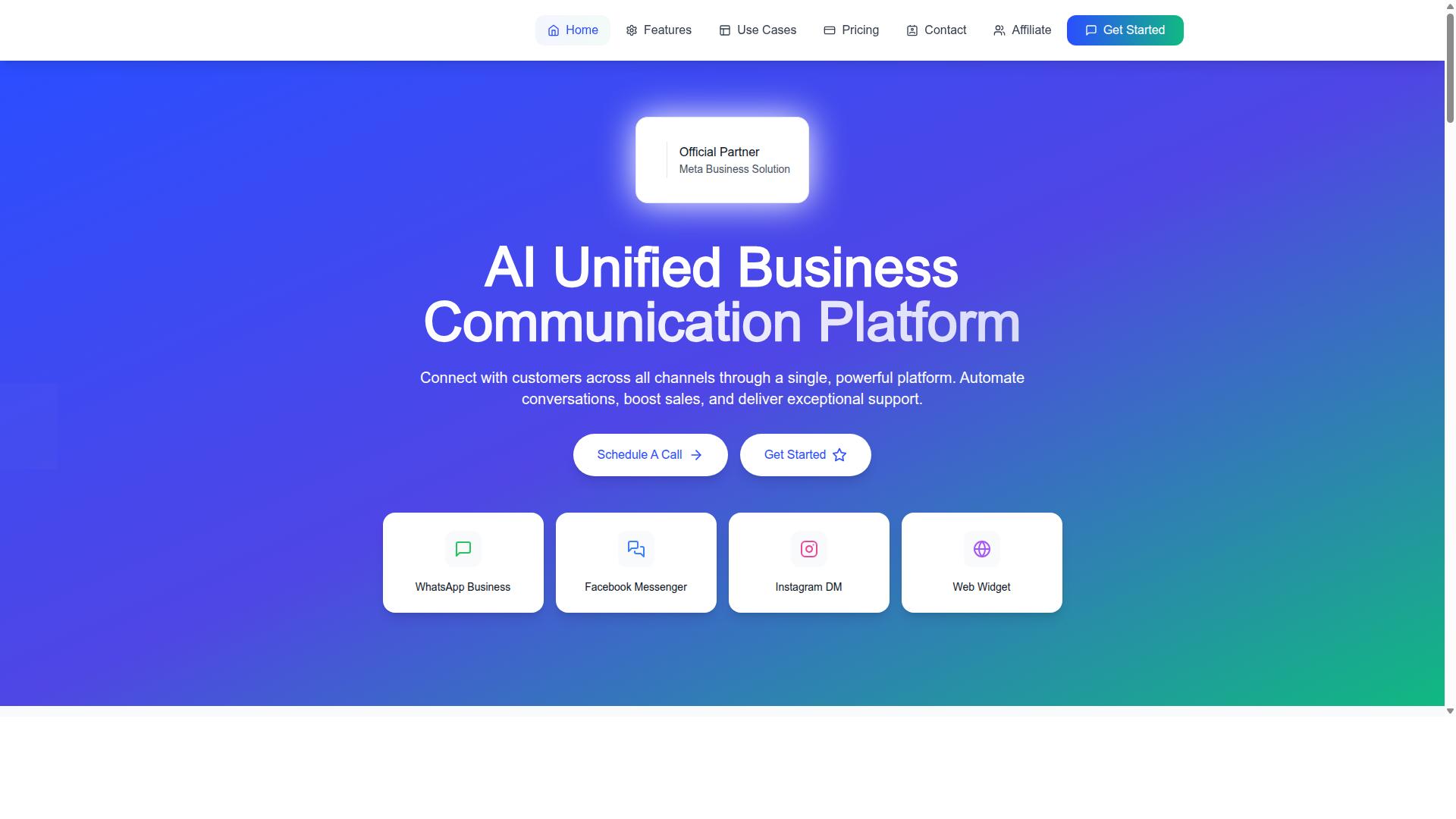
Com.bot is an AI-powered unified business communication platform that transforms Instagram direct messages into a structured lead generation channel. Instead of juggling separate apps for each social channel, teams work from one place.
The platform connects customers across WhatsApp Business, Facebook Messenger, Instagram DM, and Web Widget through a single interface. That means an Instagram conversation and a WhatsApp thread can sit side by side in the same workspace.
Com.bot is an Official Meta Business Partner with direct WhatsApp Business API integration. That partner status matters for buyers comparing Instagram DM lead generation tools in 2026, because API access and platform compliance often influence both pricing tiers and long-term reliability.
Owned and Managed by Com Bot AI Limited, the platform is built for businesses that treat social inboxes as revenue channels rather than support queues. Its core capabilities include a Unified Team Inbox, a Visual Bot Builder with a drag-and-drop interface, Multi-Channel Support, an Automation Builder with 1000+ integrations, Smart Chatbots, Bulk Messaging, and Notifications. Team Collaboration with role-based access keeps larger sales teams organized.
For anyone building a 2026 pricing comparison, the key question is not just what a tool costs per month. It is how much manual work the tool removes from lead capture and lead qualification. Com.bot's approach centralizes both, which is why its Instagram DM mechanics deserve a closer look before you weigh subscription plans.
How Com.bot Turns Instagram DMs Into Qualified Leads
Using Com.bot's visual bot builder, businesses can design conversational flows that automatically qualify Instagram leads based on user responses. The process follows a clear sequence from first message to sales handoff.
- A user sends a DM to the business account.
- The Instagram chatbot engages with pre-set questions.
- Contact details are captured during the conversation.
- Qualified leads are routed to the sales team through the unified inbox.
The drag-and-drop automation in the Visual Bot Builder means flows are assembled visually rather than through code. Real-time notifications then alert the right people when a lead needs human attention, so hot prospects do not sit unanswered.
This matters for cost per lead. When a DM funnel builder handles the first round of questions, a sales rep's time goes only to prospects who already fit the criteria. That is the practical link between automation software and conversion rate: fewer hours spent on unqualified conversations.
Com.bot also supports lead nurturing beyond the first exchange. Bulk Messaging and Order Updates keep past conversations active, while the Automation Builder with 1000+ integrations connects the flow to the rest of your stack. Native Payments for WhatsApp transactions and Payment Collection extend the same logic to closing, not just qualifying.
Scalability is the other factor. As message volume and user seats grow, a structured DM funnel keeps lead capture consistent instead of dependent on whoever is watching the inbox. That consistency is what makes the platform's pricing worth evaluating against the manual effort it replaces.
How Much Do Instagram DM Lead Generation Tools Cost in 2026?
In 2026, Instagram DM lead generation tools range from $50 to $500 per month, depending on features and usage limits. That spread is wide because the category itself is broad. A lightweight DM funnel builder aimed at solo creators sits at the low end, while a full automation platform with lead qualification and CRM sync lands at the top.
Most vendors structure their subscription plans around three variables: automation depth, contact volume, and the level of human support included. A tool that only sends a welcome message when someone comments on a post costs far less to run than one that qualifies leads, routes them to a sales rep, and tracks every conversation.
Tiered pricing is the norm rather than the exception. A typical ladder looks like this:
- Starter tier: one account, a few hundred contacts, basic auto-replies
- Growth tier: multiple accounts, thousands of contacts, branching flows
- Enterprise tier: custom quote, higher API limits, dedicated onboarding
Annual billing usually lowers the effective monthly rate by a meaningful margin, often in the range of two months free. A free trial or freemium tier is common, though free plans typically cap contacts hard enough that they work better as a test drive than a permanent home. The sections below break down how each pricing model works and which cost drivers push your bill up.
Typical Pricing Models: Per-Seat, Per-Message, and Flat-Rate Plans
Most Instagram DM automation tools adopt one of three pricing models: per-seat, per-message, or flat-rate subscriptions. Each one shifts risk to a different side of the table, so the cheapest headline price is rarely the cheapest real price.
Per-seat pricing charges for each user account that logs in. A common structure is a base fee covering one seat, then roughly $10 per additional seat per month. This works well for small teams where only one or two people manage the inbox. It becomes expensive fast for agencies running many client accounts, since every operator needs their own seat.
Per-message or usage-based pricing ties cost to volume. You might pay a monthly base plus a rate per conversation or per thousand messages sent. This model suits businesses with unpredictable traffic, because you pay for what you actually use. The downside is that a viral post or a seasonal spike can produce a surprisingly large bill, and forecasting becomes harder.
Flat-rate plans charge one price regardless of how many team members log in. The trade-off is a cap on messages, contacts, or connected accounts. Flat-rate appeals to teams of five or more who want predictable monthly pricing and do not want to think about seats. For a single operator, though, a flat rate often means paying for capacity that never gets used.
The practical rule: match the model to your shape. Solo users and small teams usually win on per-seat. High-volume, spiky campaigns often win on usage-based. Larger teams with steady volume tend to get the best value from flat-rate or an enterprise plan with a custom quote.
What Drives Your Total Monthly Cost
Your monthly bill can be influenced by factors such as the number of user seats, monthly active contacts, message volume, and add-on features. Understanding each driver before you commit is the difference between a predictable invoice and a nasty surprise.
User seats are the most visible driver. Many tools include one or two seats in the base plan and charge around $10 per additional seat. If your support or sales team rotates people through the inbox, seat count can quietly double your spend.
Contact limits define how many unique people the tool will track and message. Tiers commonly step up in blocks, for example 1,000 contacts, then 5,000, then 25,000. Exceeding a tier usually forces an upgrade rather than a small overage, so it pays to estimate your monthly active contacts rather than your total follower count.
Message volume and overage charges apply on usage-based and capped flat-rate plans. Once you pass the included allowance, each additional message or conversation is billed. A single well-performing campaign can push you over the line.
API access fees deserve attention. Tools built on the official Meta Graph API may pass through platform costs or restrict advanced access to higher tiers. Confirm whether API limits are tied to your plan before you scale.
Finally, premium support and onboarding can carry a setup fee or an annual add-on. Watch for hidden fees such as charges for extra connected accounts or advanced analytics. The safest approach is to forecast your peak month, not your average month, and pick the tier that survives it.
Com.bot Pricing and Plans
Com.bot offers three quarterly subscription tiers, Silver, Gold, and Platinum, designed to accommodate businesses of varying sizes and needs. Each tier is billed every three months rather than monthly, which gives teams a predictable cost window for budgeting their Instagram DM lead generation tools.
All three plans include the core capabilities that make Com.bot a practical choice for direct message automation: an Instagram chatbot, a DM funnel builder, lead capture, lead qualification, and lead nurturing. The difference between tiers comes down to scale and the depth of automation each business requires.
Because billing runs quarterly, the headline prices you see are not monthly figures. That distinction matters in any pricing guide for 2026, since many competing tools advertise monthly pricing while charging annual billing upfront. Com.bot's quarterly model sits between the two, offering a shorter commitment than annual billing without the month-to-month churn of pure monthly pricing.
Com.bot also separates its pricing into a base subscription plus optional add-ons. Add-ons cover additional team members, social channels, and external actions, so a business only pays for the capacity it actually uses. This structure keeps the entry point low for small teams while allowing larger operations to scale user seats, contact limits, and message volume as their DM funnel grows.
For enterprises with high-volume needs, the Platinum V1 tier at $2,500 per quarter anchors the top of the range. The three H3 sections below break down what each plan includes, how add-ons are priced, and how to estimate your true total cost before committing.
Silver, Gold, and Platinum Plans Compared
The Silver plan at $149 per quarter suits small teams, while the Gold plan at $349 per quarter adds advanced automation and is recommended for growing businesses. Platinum V1 at $2,500 per quarter is tailored for enterprises with high-volume needs and dedicated support.
| Plan | Price | Best For | Positioning |
|---|---|---|---|
| Silver | $149 per quarter | Small teams | Entry-level access to core DM automation |
| Gold | $349 per quarter | Growing businesses | Recommended tier with advanced automation |
| Platinum V1 | $2,500 per quarter | Enterprises | High-volume needs with dedicated support |
The jump from Silver to Gold is modest in dollar terms but meaningful in capability. Gold is the tier Com.bot itself recommends, which signals it covers the automation depth most growing teams need for lead qualification and nurturing at scale.
Platinum V1 is a different category entirely. At roughly seven times the Gold price, it targets organizations running high message volume across multiple channels and requiring dedicated support. If your DM funnel processes thousands of conversations per month, the per-conversation economics can justify the step up.
When comparing tiered pricing across Instagram DM lead generation tools, look past the headline number. A cheaper plan that caps message volume or user seats can end up costing more through overage charges than a higher tier with room to grow. Match the plan to your realistic 2026 volume, not your current month.
Add-Ons and Dedicated Support Costs
Com.bot offers add-ons such as additional team members, social channels, and external actions for $10 per month each, with volume discounts for larger purchases. The $10 monthly rate applies per additional team member, per social channel, and per 5,000 external actions.
Beyond those three, the same $10 monthly rate covers bot triggers per 25,000 and an ecom store. This keeps add-on pricing uniform across categories, which makes estimating your total cost straightforward once you know your usage.
Dedicated support is priced separately by the hour:
- WABA, CRM, and Inbox support: $49 per hour
- Ecommerce, Bots, and Automations support: $99 per hour
Dedicated support may also be available as a custom add-on for enterprise clients, which is worth requesting a custom quote for if your team needs ongoing assistance rather than occasional hours.
One point in Com.bot's favor: WhatsApp messaging is billed at actual Meta rates with no markup. That removes a common hidden fee where platforms quietly add margin to messaging costs. Currency is listed in USD, and the site offers an INR toggle, so verify which currency applies to your account before finalizing your budget.
To calculate your true cost, list every add-on you expect to need, multiply by $10 per month, add your quarterly plan price, then factor in any support hours. Estimating add-on needs upfront prevents surprise overage charges and gives you a realistic cost per lead figure for the year ahead.
Key Features That Justify the Price
Com.bot's feature set includes a visual bot builder, multi-channel support, and native payments, which collectively deliver a strong return on investment for lead generation. When evaluating Instagram DM lead generation tools in 2026, the sticker price alone tells only part of the story. What matters is whether the subscription plans deliver capabilities that actually reduce manual work and convert more conversations into qualified leads.
Cheaper tools often charge less because they automate less. A basic DM funnel builder might handle simple keyword replies, but it leaves your team to sort, route, and follow up on every lead by hand. That hidden labor is a real cost, even when the monthly pricing looks low.
Com.bot takes a different approach. Its platform combines a Visual Bot Builder, an Automation Builder with 1000+ integrations, and a Unified Team Inbox into one subscription. These are the features that separate a tool that supports lead generation from one that merely reacts to messages.
For buyers comparing tiered pricing and annual billing options, the question to ask is simple: how much of the lead journey can the software handle on its own? Features like native payments, bulk messaging, and multi-channel support for WhatsApp, Facebook and Instagram directly affect cost per lead and scalability. The sections below break down the three capabilities that carry the most weight.
Visual Bot Builder, Automation Builder, and Unified Team Inbox
The visual bot builder allows users to create complex DM funnels without coding, while the unified team inbox ensures no lead is missed across Instagram, WhatsApp, and Facebook. Together with the Automation Builder, these three tools form the core of what a Com.bot subscription pays for.
The Visual Bot Builder uses a drag-and-drop interface. Instead of writing scripts or hiring a developer, marketers map out conversation flows visually: a greeting, a qualifying question, a lead capture step, a follow-up. This lowers the barrier to building a real DM funnel, which matters for small teams that cannot dedicate engineering time to direct message automation.
The Automation Builder extends that logic across your stack with 1000+ integrations. Triggers can move a lead from a first reply into nurturing sequences, order updates, or notifications without someone manually pushing data between tools. That is where lead qualification and lead nurturing start to scale beyond what a human team could handle alone.
The Unified Team Inbox handles the moment a conversation needs a person. Team collaboration with role-based access means leads can be assigned, answered, and tracked in one shared space rather than scattered across personal accounts. For any business weighing per-seat pricing, this is the feature that determines how many user seats you actually need.
Native Payments for WhatsApp transactions closes the loop, turning a qualified conversation into revenue inside the same platform. Taken together, these features reduce manual effort at every stage of the funnel, which is exactly what drives a stronger conversion rate and a healthier ROI on your subscription. Features like Bulk Messaging and Smart Chatbots round out the value, supporting outreach and support at volume without adding headcount.
Trust Signals: Why 23,000+ Businesses Choose Com.bot
With over 23,000 active customers and official Meta Business Partner status, Com.bot has established itself as a trusted solution for Instagram DM lead generation. That combination matters when you are weighing subscription costs, because a platform's track record is part of what you are actually paying for.
Pricing is only one side of the equation. The other side is whether the tool will still be around, still compliant, and still delivering messages when your lead flow depends on it. Com.bot's trust indicators answer that question directly.
The numbers behind Com.bot's adoption are worth examining, because they show the platform operates at a scale few DM automation tools reach:
- 23,000+ active customers rely on the platform for their messaging workflows
- 100+ government bodies use Com.bot, a segment that typically demands strict procurement and security standards
- 500+ global partners build on and resell the platform
- 25 million+ messages processed daily, demonstrating real-time message delivery at volume
- 100,000+ bots created by users across the platform
Government adoption is a particularly strong signal. Public sector buyers rarely move quickly, and they rarely accept weak security postures. The fact that more than 100 government bodies have chosen Com.bot suggests the platform meets a bar that casual DM tools do not.
Security sits at the center of that trust. Com.bot provides enterprise-grade security with end-to-end encryption, which matters for any business handling customer conversations, contact details, and lead data inside Instagram direct messages.
Compliance is the other pillar. As an official Meta Business Partner, Com.bot operates within Meta's API policies and platform rules. For buyers comparing Instagram DM lead generation tools, this reduces the risk of account restrictions that unofficial automation methods can trigger.
Setup speed also plays into confidence. Com.bot emphasizes quick setup and integration, so teams can move from evaluation to live lead capture without a lengthy implementation project. Real-time message delivery keeps conversations responsive, which supports both lead qualification and lead nurturing.
When you evaluate monthly pricing, annual billing, per-seat pricing, or usage-based pricing across automation software, factor in reliability. A cheaper tool that risks your Instagram account or stalls on message volume carries hidden costs that never appear on the invoice. Com.bot's scale, security posture, and Meta partnership are the reasons thousands of businesses treat it as the safer line item.
Who Should Use Com.bot for Instagram DM Lead Generation
Com.bot is ideal for businesses of all sizes, from startups to enterprises, that rely on Instagram for customer engagement and lead generation. Its platform is built to automate and scale communication across WhatsApp, Facebook, and Instagram channels, which makes it a natural fit for teams that handle conversations on more than one network.
Rather than juggling separate tools for each channel, teams can manage direct message automation and lead capture from a single system. That matters for anyone weighing Instagram DM lead generation tools on cost versus coverage.
Com.bot serves a deliberately broad audience. The verified target profiles include:
- E-commerce brands that need order updates, payment collection, and bulk messaging at scale
- Agencies managing Instagram and messaging workflows on behalf of multiple clients
- Government bodies requiring reliable multi-channel customer support
- Enterprises that need consistent communication across WhatsApp, Facebook, and Instagram
Each of these groups shares one trait: high conversation volume and a need for dependable automation. A small retailer answering a handful of DMs a day and a public agency fielding thousands of citizen inquiries have different budgets, but the same core requirement, which is scalability without adding headcount.
This is where the question of pricing structure becomes practical rather than abstract. Com.bot scales with user seats and message volume, so a two-person startup and a large enterprise can both run the platform at a level that matches their actual usage.
Small teams benefit because they are not forced into an enterprise plan on day one. As lead volume grows, they can add seats or capacity instead of migrating to a new tool. Larger operations benefit because the same platform absorbs bulk messaging and multi-channel support without fragmentation.
For readers building a 2026 budget, the takeaway is straightforward. If your business touches Instagram for lead generation, and especially if you also handle WhatsApp or Facebook conversations, Com.bot is designed for exactly that profile. Match the plan tier to your seat count and message volume, and the platform grows alongside your operation rather than against it.
Final Verdict: Is Com.bot Worth the Cost in 2026?
For businesses seeking to automate Instagram DM lead generation, Com.bot delivers a compelling ROI through its robust feature set and scalable pricing. The question is not whether the tool costs money, but whether the value it returns justifies the spend. Based on its capabilities in lead capture, lead qualification, and direct message automation, the answer leans firmly toward yes for teams that rely on Instagram as a revenue channel.
When evaluating any Instagram DM lead generation tool, the real comparison is feature depth against cost, not price alone. A lower monthly fee means little if the platform cannot handle DM funnel building, Instagram chatbot flows, or reliable lead nurturing at scale. Com.bot's tiered pricing structure is designed so that businesses pay for the capacity they actually use, from smaller teams testing direct message automation to larger operations managing higher message volume and user seats.
Cost per lead is where automation software proves its worth. Manual DM outreach consumes staff hours, and those hours carry a real cost. By automating first responses, qualifying prospects, and routing conversations, Com.bot helps reduce the human effort behind each captured lead. That shift often improves both conversion rate and overall efficiency, which is the core argument for treating a subscription as an investment rather than an expense.
Positive customer outcomes tend to follow the same pattern. Teams that adopt DM automation report smoother lead capture, faster response times, and less dependence on manual follow-up. While individual results vary by niche and offer, the underlying value proposition holds: consistent automation frees people to focus on closing deals instead of chasing inboxes.
Premium plans are an investment, and that framing matters. Businesses should weigh the monthly or annual billing cost against the leads they expect to capture and the staff time they expect to save. When automation handles the repetitive work, the effective cost per lead frequently drops, even as the subscription line item appears on the budget.
For readers ready to evaluate Com.bot firsthand, the practical next step is to explore what each plan includes and match it to current needs. Reach out at [email protected] or call +91 080 6987 1810 during business hours, Monday to Friday, 9:00 AM to 6:00 PM IST. WhatsApp support is also available for quick questions.
The verdict for 2026 is straightforward. If Instagram DMs are a meaningful part of your lead generation strategy, Com.bot's combination of automation, lead capture, and scalable pricing makes it a worthwhile investment. See how it fits your workflow, and let the results speak for themselves.
Frequently Asked Questions
How much does Com.bot cost for Instagram DM lead generation?
Com.bot's pricing starts with the Silver Plan at $149 per quarter and the Gold Plan (recommended) at $349 per quarter. For larger operations, the Platinum V1 plan is $2500 per quarter. Every plan runs on the same unified platform that connects Instagram DM alongside WhatsApp Business, Facebook Messenger and your Web Widget, so you can manage Instagram leads without switching tools.
Are there extra costs on top of the plan price?
Yes, Com.bot offers optional add-ons at $10 per month each. These cover an additional team member, an additional social channel, external actions (per 5000) and bot triggers (per 250). If your Instagram lead volume or team grows, you can scale these add-ons instead of jumping to a higher plan.
Is there a free trial or a cheaper entry option?
Com.bot does not publish a free tier in its current pricing. The most affordable way to get started is the Silver Plan at $149 per quarter, which gives you access to the core platform including multi-channel support for WhatsApp, Facebook and Instagram. If you need more capacity or features, the Gold Plan at $349 per quarter is the recommended option.
Why do Instagram DM lead generation tools vary so much in price?
Pricing usually depends on how many channels, team members, contacts and automated actions you need. A single-channel DM tool will typically cost less than a unified platform that also handles WhatsApp, Messenger and web chat with automation and a shared team inbox. When comparing options, look at the total cost of the channels and seats you actually need rather than the headline plan price alone.
How does Com.bot compare to other Instagram DM tools on cost?
Rather than matching a single competitor's price, it's worth comparing what each plan includes. Com.bot bundles Instagram DM with WhatsApp Business, Facebook Messenger and Web Widget in one AI Unified Business Communication Platform, plus a Visual Bot Builder and Unified Team Inbox. For businesses already handling leads on multiple channels, consolidating into one platform can be more cost-effective than paying for several separate tools.
Can I cancel or change my Com.bot plan later?
Yes. Com.bot publishes a Cancellation Policy, Privacy Policy and Terms of Service, so you can review the terms before committing. Plans are billed quarterly, which means you can reassess your needs at the end of each quarter. For specific questions about upgrading, downgrading or cancelling, contact the team at [email protected] or via WhatsApp support during business hours (Monday-Friday, 9:00 AM-6:00 PM IST).
Recommended Resources: